Printmore- You Have No Idea How Cool it is to Print on Rice Paper
This past week, we held our monthly print review session. In this month’s session, we discussed and printed on rice paper!
If you’ve ever listened to me blab on, you’ll know that I always say that you should print your work. There are a number of reasons for this, and even though I mention them all the time, it’s worth mentioning them here again.
1- In this ever-increasingly digital world, there is nothing tangible about digital that can be left behind. In other words, 10 years from now or 25 years from now or 100 years from now, your digital images will not exist, but your prints will.
2- Printing shows all your faults, so it’s much easier to learn how to correct those mistakes by printing. From exposure to touch-ups to color and saturation, you’ll learn a ton about how to make your images better!
My third point is that printing can become the next dimension of your storytelling. I always emphasize to printers to think about what paper to use to as a part of the dialogue of the image. Is this an image of a soft, flowing stream that would be emphasized by a cotton-rag matte paper? Is this an old-school street scene that would benefit from a textured paper? Or should that same street scene be put onto something with a bit more pizzaz, like a luster or gloss paper?
Enter one of my favorite paper styles—Rice Paper. Even though rice paper is not actually made of rice—it’s generally made of fibers from the mulberry bush—it has an extremely delicate nature, similar to the edible rice paper! Most rice papers you will find are semi-translucent, roughly 50-100 gsm (grams per square meter). (As examples, most basic papers are 200 gsm and fine art papers are 300 gsm; cheap notebook paper is 70gsm.)
There are two major styles of rice paper, also known as washi—Kozo and Unryu. Kozo is generally thin, delicate, and with a very light texture. Unryu is similar, sometimes thinner, and with visible fibers from the mulberry bush. While Kozo is the most common style, Unryu is likely the most recognizable, as it has that noticeably textured look.
So, why is it so cool to print on rice paper? The look of the paper is really unlike any other paper. When you print on matte or a glossy paper, it has a definable look. With rice paper’s delicate nature (and fibrous texture, if using Unryu), it looks so different than a matte paper, despite it being a matte paper!
These papers lend themselves incredibly well to a certain style. Minimalism. Intentional camera movements. Abstracts. Close-up. Architecture. Sometimes (but not always) landscapes. On the Kozo, the softness gives the images that fragile touch that make the image feel like it will simply blow off the page, if we’re not careful. On the Unryu, there is a textural quality to that delicate nature that adds a bit of a different look to the end result.
Not everything works on these papers. Unryu requires a bit of lighter-toned negative space so one can see those mulberry fibers. Kozo is a matte paper, so lower contrast images don’t necessarily work as well.
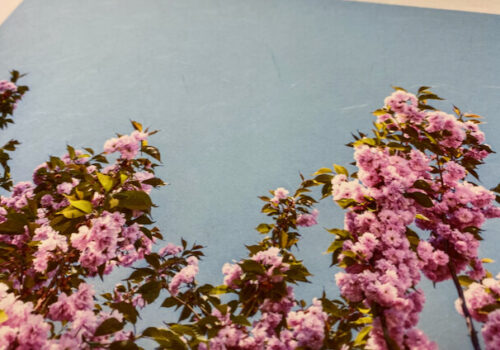
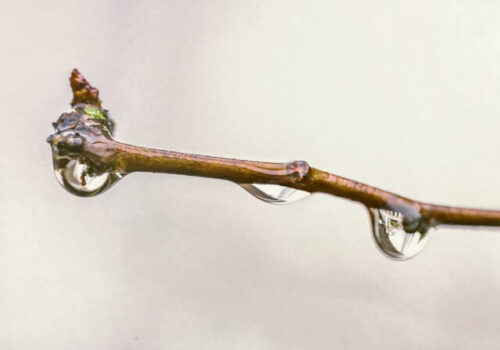
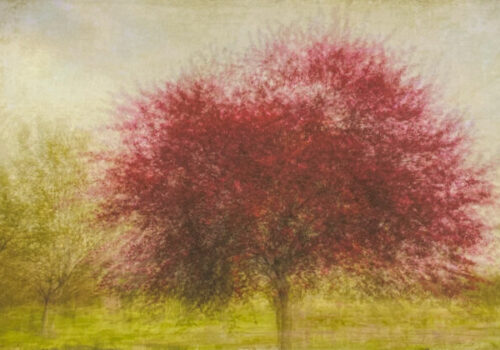
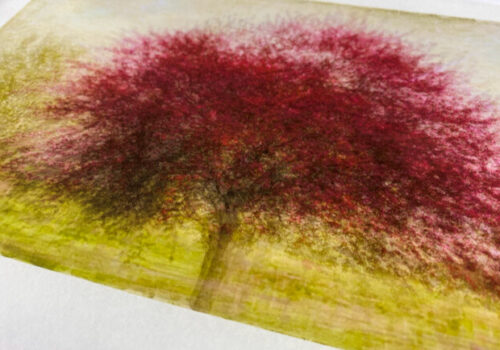
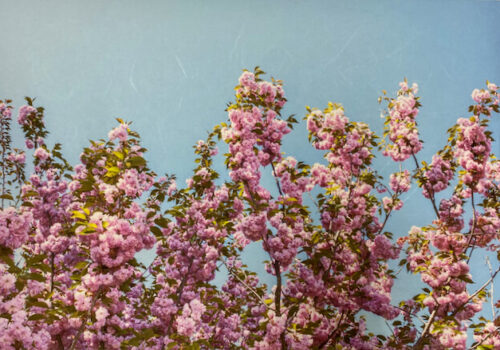
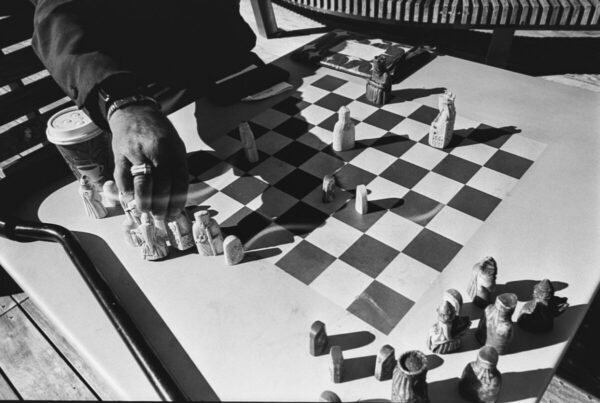
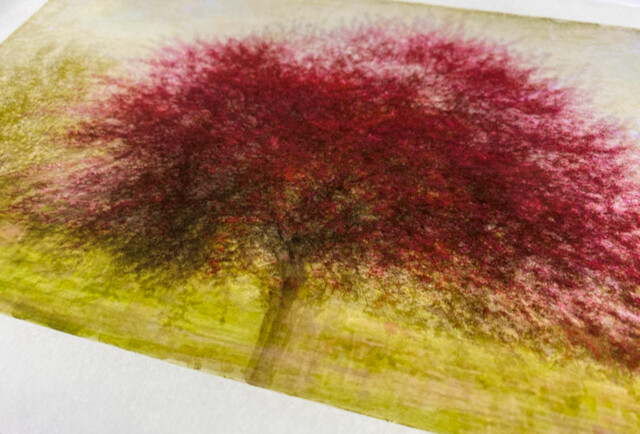
In this month’s print review session, we printed mostly on the Kozo papers, as most did not have as much negative space in the images selected, but we printed one on the Unryu that was truly awesome. Note the beautiful wispy nature of the cherry tree with the fibers floating along the blue sky. The remaining images—abstract, close-up, and minimalist images—have that same delicate nature that make them so unique.
Print Review Monthly classes run once a month and are a great way to learn about editing, printing, and just photography in general. Plus you get an amazing print—how can you go wrong?