Notes from the Field: Navajo Nation and the Value of Listening
One of the things I’ve learned from leading photography workshops is that even though I’m the one leading the trip, I’m still learning too.
Some of my best lessons have come from the people I’m traveling with—not necessarily because they have all the answers, but because they sometimes see an opportunity that I might have overlooked.
That was certainly the case on my recent Hunt’s Navajo Nation Photo Adventure.
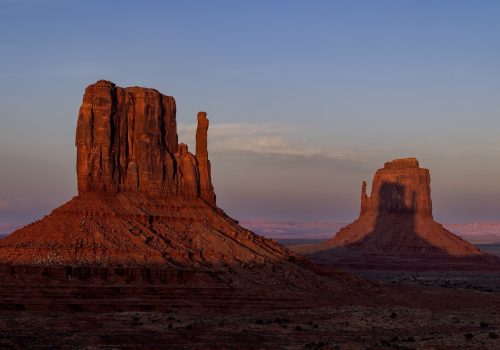
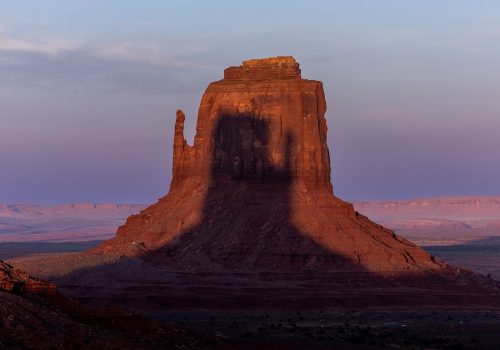
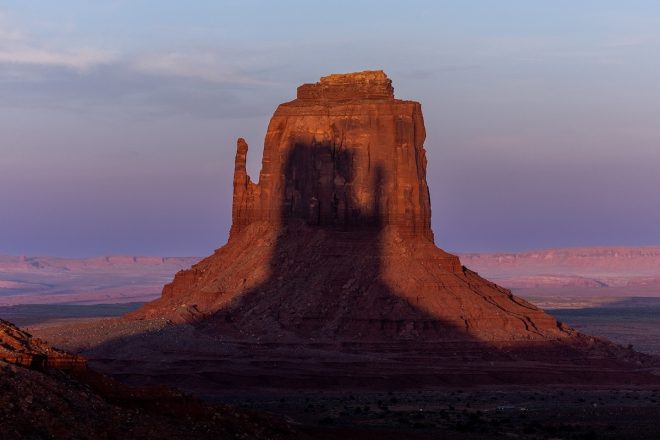
When I put this trip together, I was pretty specific about the timing. One of the things I wanted the group to experience was the Mitten Shadow in Monument Valley.
Around the spring and fall equinoxes, the setting sun lines up with the West Mitten Butte and casts its shadow across the face of the East Mitten. For a few minutes, the shadow slowly climbs the East Mitten, creating a pretty remarkable natural alignment and a very specific photographic opportunity.
It’s one of those photographs that requires some planning. You have to be there on the right day, at the right time, with the right light—and then hope Mother Nature cooperates.
That was the plan.
But as I started looking more closely at the dates, I realized something else.
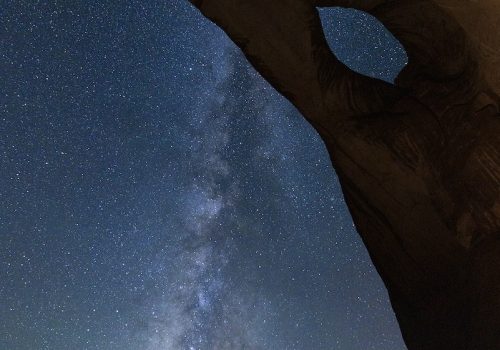
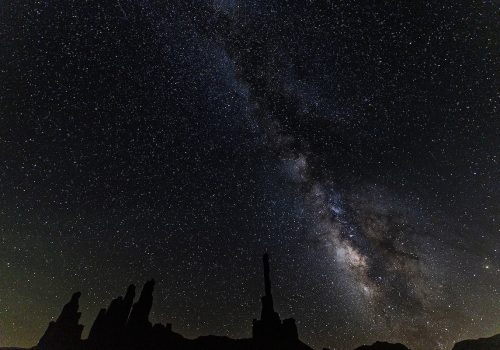
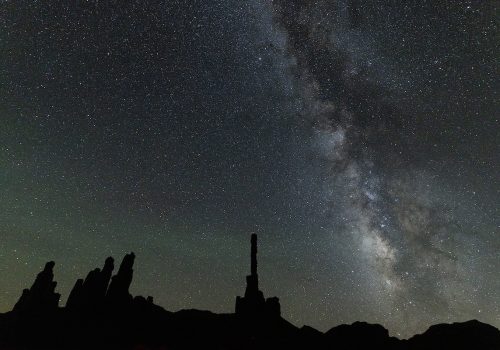
We were going to be there around a new moon, which meant very dark skies. And in the early night hours, the Milky Way would be visible above the horizon.
Night-sky photography wasn’t really part of my original plan. And honestly, it isn’t something I have a tremendous amount of experience with. I’ve photographed the Northern Lights quite a bit in Iceland, but outside of that, I’ve only really done dedicated night-sky photography once or twice.
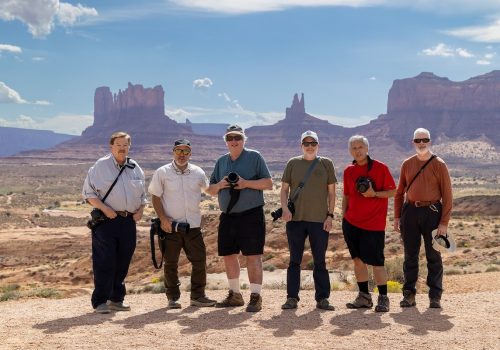
One of my returning participants, Mark Stevens, had some experience with it and had talked about night-sky photography on a previous workshop in Moab.
That stuck with me.
This time, I decided to explore it.
So I found a Navajo guide who could take us deeper into Monument Valley after dark, and we added a night of photographing the Milky Way to the trip.
And here’s the funny part: Mark actually had more experience with night-sky photography than I did.
So rather than pretending I was the expert, I told the group we were going to figure some of this out together.
With a little help from Mark.
Thanks, Mark.
We headed into Monument Valley in the darkness with the red glow from our headlamps, cameras and tripods in tow, and suddenly everyone had a new problem to solve.
Night-sky photography has a lot more to it than simply pointing your camera at the sky and focusing on infinity.
Getting sharp stars means knowing your camera and your lens. You need to understand how to focus at or near infinity, know the focal length you’re shooting at, and know how long you can leave the shutter open before the stars start to show noticeable movement.
And there isn’t one magic setting that works for everyone.
Different cameras perform differently at high ISOs. Different lenses have different focal lengths and maximum apertures. And the longer your focal length, the more quickly star movement becomes noticeable.
We also started talking about something that seems a little counterintuitive: more megapixels don’t necessarily make a camera better for night-sky photography.
Some of today’s very high-resolution cameras can be incredible for daytime landscape photography, but that huge resolution can come with some tradeoffs when you’re working in very low light. Depending on the camera and sensor, high-ISO noise can become more noticeable, and the additional detail can make small amounts of star movement easier to see.
So again, it comes back to knowing your camera.
The camera you grab for a daytime landscape isn’t necessarily the camera you would choose for every night-sky situation. Sometimes a lower-resolution body with good high-ISO performance can be a better fit for the job.
That’s one of the things I enjoy about photography. There is rarely one piece of gear or one setting that is simply “the best.” It depends on what you’re trying to photograph.
And then there was the whole issue of actually seeing what we were doing.
You can’t really rely on your eyes to set things up when you’re photographing in almost complete darkness. We had to use our cameras to help us focus, magnify the stars on the rear screen or viewfinder, check our exposure and make adjustments.
It became a group learning experience, but this time I was in learning mode too.
And it was a lot of fun.
We had such a good time that when we finished that first night, nobody really wanted to stop. We ended up going out again another night on our own to practice what we had just learned.
By the end of the trip, the night-sky bug had definitely bitten us.
During the heat of the day, when it was just too hot to be out making photographs, we started gathering around midday to talk about our images, cameras and equipment. Mark even brought out his star-tracking device and showed everyone his setup.
That may have been a mistake.
Before long, people were pulling out their phones and looking at star trackers and other gear for future nightscape and astrophotography adventures.
Apparently, we had all caught the bug.
And I had learned something too.
Sometimes the best thing I can do as a workshop leader is not assume that I already know exactly how a trip is going to unfold.
I’m there to provide the experience, the locations, the logistics and the photography knowledge I’ve accumulated over a career. But I’m also there to stay curious and pay attention.
A good workshop isn’t just me standing at the front of the group telling everyone what to photograph. It’s a shared experience. I learn from the people who come along just as they learn from me.
The Mitten Shadow was the photograph I planned the trip around.
The Milky Way was the photograph I discovered along the way.
And sometimes, being willing to listen is what opens the door to something you never planned for.