Notes from the Field: Wild Horses in Utah
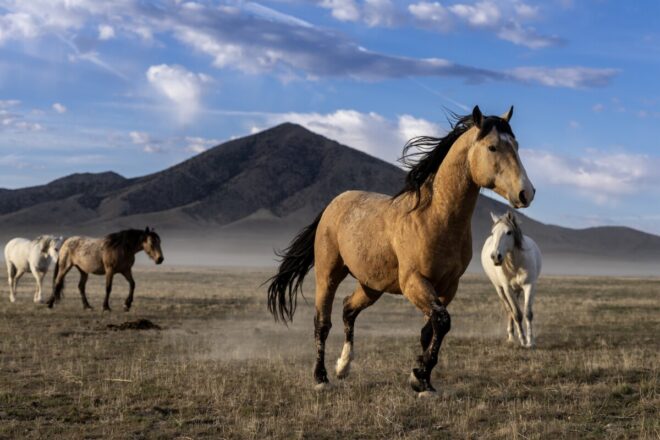
Tooele, Utah
April, 2026
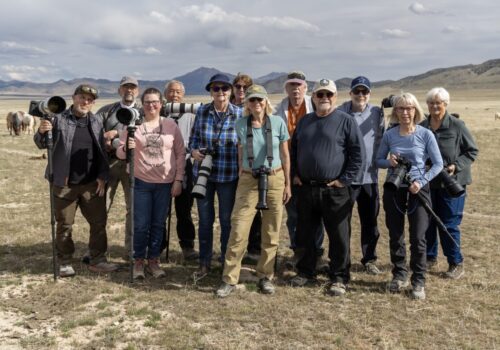
I’ve been photographing the wild horses of Utah for nearly ten years and leading Hunt’s Photo Adventures wild horse photography workshops in Utah since 2019. This was the very first workshop I ever led, and my good friend Bob Fletcher and I have been running it together ever since. This trip holds a special place for me. There’s a lot of history and nostalgia tied to it. I lived in Utah until about two and a half years ago, which meant I could visit these wild horses often. Now that I’m based in Florida, this Utah wild horse photography workshop is something I genuinely look forward to all year.
After we pick everyone up at the airport, we head to a small town about forty minutes from Utah’s West Desert. We check into the hotel, grab some lunch, and talk through the week ahead before heading out for our first evening photography session. That’s usually when the excitement really starts to build for me. The butterflies kick in—not because of logistics or meeting a new group—but because I start wondering how quickly we’ll find the wild horses once we’re in the field.
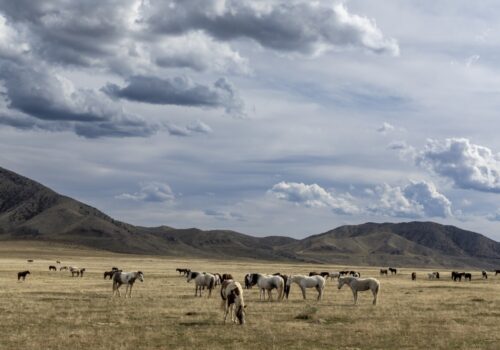
Because the truth is… they’re wild animals. Sometimes they’re easy to locate, and sometimes they make us work for it. Honestly, I don’t mind the search. It’s part of what makes photographing wild horses in Utah so rewarding. We’re working inside a 240,000-acre Herd Management Area, so each day is different. Sometimes we spend time searching ridgelines and valleys, and other times—like this recent trip—we find the horses almost immediately. Either way, the process is part of the story.
As soon as we enter the range, I put everyone to work spotting and scanning. Eyes on the hills, checking every ridge. And without fail, we go through the same familiar moments:
“Jeff! Is that them?” “Nope… cows.”
“I think I see them over there!” “Nope… just bushes.”
It builds anticipation until someone finally spots the herd.
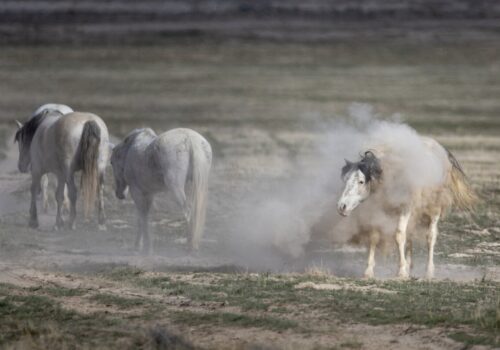
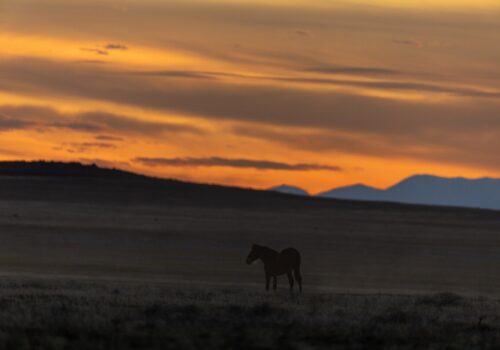
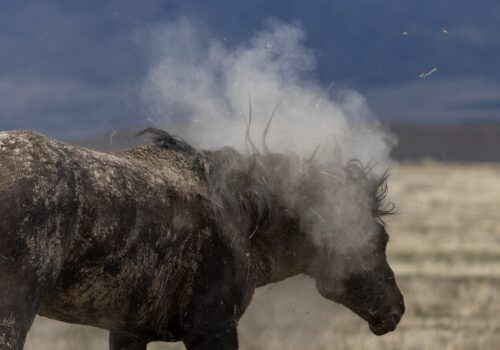
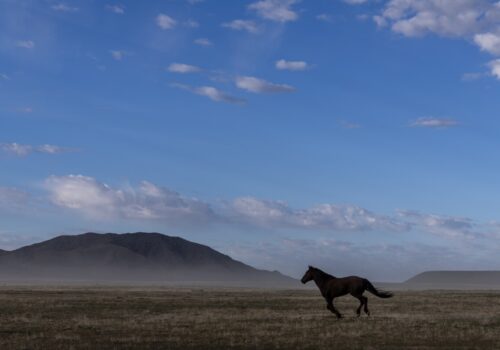
Our days are structured around light—early mornings for sunrise photography, midday breaks, and then back out again for sunset sessions. We’re not just chasing horses; we’re chasing light across the Utah desert landscape. My favorite time is always the evening. That’s when we can find the horses, settle in with them, and watch as the sun drops behind the mountains. The golden light combined with dust in the air often creates some of the most dramatic wild horse photography conditions in the American West.
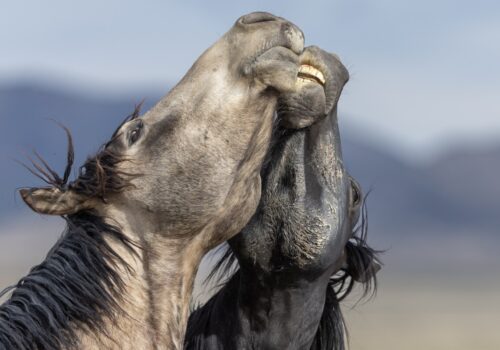
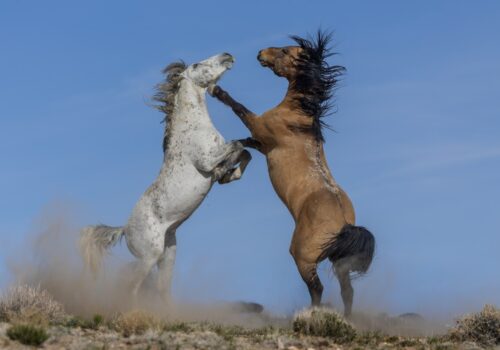
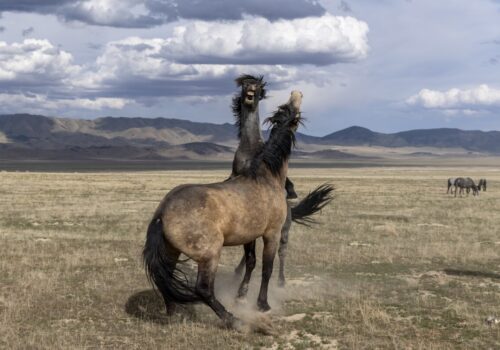
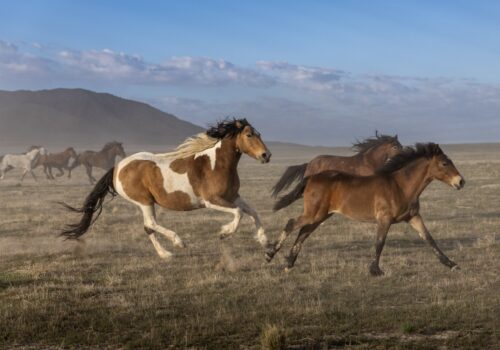
And of course, everyone hopes for action—stallions sparring, horses running, and those unpredictable bursts of energy when the herd shifts direction or tension rises. During the workshop, we also spend time reading behavior—understanding body language, herd dynamics, and learning how to anticipate movement before it happens. That knowledge becomes just as important as camera settings when photographing wild horses in action. We also work through technical skills like freezing motion, panning, and capturing decisive moments in fast-changing light.
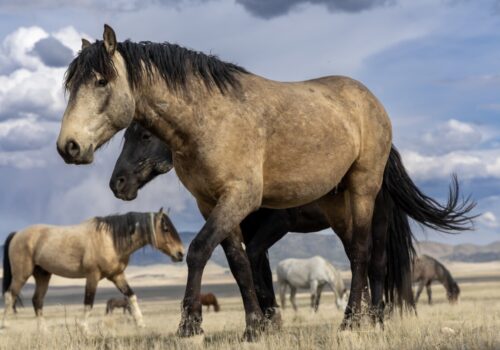
The Onaqui herd currently numbers just over 200 horses. Years ago, there were nearly 500 before the Bureau of Land Management reduced the population to what they consider a sustainable level for the range. But I always remind participants to put the camera down every once in a while. Take it in. Look around. The scale of this place can be overwhelming in the best possible way. I’ve seen people get emotional out there. For many, this is the most wide-open landscape they’ve ever experienced—vast desert valleys, mountain backdrops, changing light, and wild horses moving freely through it all.
This past week brought unusually warm early-season temperatures—warmer than we typically expect for this time of year. Snowpack is down across parts of the West, rivers are low, and the Great Salt Lake continues to struggle. These conditions will eventually affect the horses as we move deeper into the warmer months.
From a photography standpoint, however, it was spectacular. Our final day brought incredible cloud formations that added drama and depth to nearly every frame.
This workshop is primarily a long-lens wild horse photography experience, typically using focal lengths from 400mm to 600mm. We are required to maintain at least 100 feet of distance from the horses for their safety and ours. But wild horses are unpredictable, and sometimes they come much closer than expected. When that happens, we adapt. We move near or behind vehicles for safety, and sometimes use them as cover. This opens up opportunities for wider-angle compositions, allowing us to tell a more complete visual story of the horses in their environment.
Every time I’m out with the horses, something new seems to happen. This trip was no different. We were following the herd by 4×4 as they moved toward a watering hole. When one horse commits, they all tend to go—and more often than not, it becomes a full-on stampede. This time, we all agreed that being in the vehicles was exactly where we needed to be. The horses surrounded us, running full sprint on both sides of the road. I encouraged everyone in my truck to grab video because it was one of those moments you don’t want to miss in any form. At one point, I actually apologized to the group for not getting us ahead of them for that “perfect arrival” shot at the water. Everyone just looked at me and said, “Are you kidding? That was incredible.” And honestly… they were right. It was one of those rare moments where missing the plan didn’t matter at all. Kind of like golf—sometimes a miss still turns into something unforgettable, because you can’t tell the full story with just a long lens.
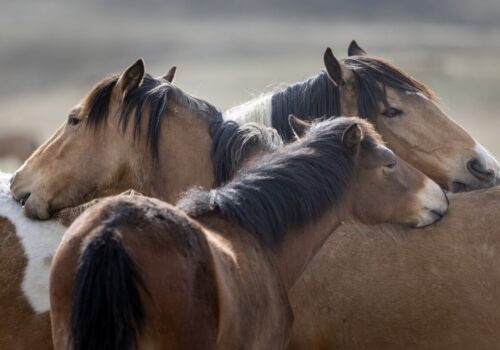
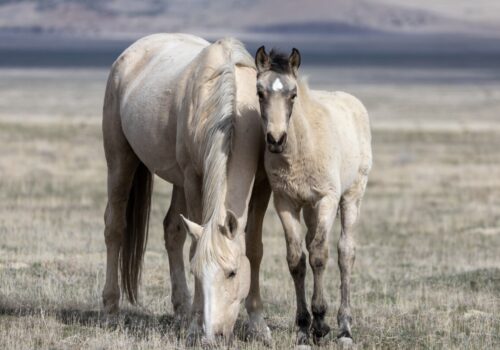
A strong wildlife photography story needs variety: wide, medium, and tight compositions. You need environmental context, behavior, detail, and emotion to fully tell the story of these wild horses in Utah. I’m always reminding participants:
You can’t make photographs if your camera is in your bag. And you definitely can’t if your lens cap is still on. For action, I typically recommend shutter priority around 1/1600th of a second, with Auto ISO and Auto White Balance. Modern cameras handle a lot of the technical work, allowing photographers to focus on timing and composition. I also strongly recommend bringing a second camera body if possible. You never know when a wide-angle opportunity will suddenly appear.
However, at the end of the day, this workshop is about more than photography. It’s about adventure, patience, reading behavior, adapting to changing light, and being ready when the moment happens. Most of all, it’s about experiencing one of the last truly wild landscapes in the American West—and walking away with more than just images. Every time I return, I’m reminded why this wild horse photography workshop in Utah with Hunt’s Photo Adventures means so much to me.
By Jeff Swinger
Jeff (and Hunt’s Photo Education) will be returning to Utah to photograph the Wild Horses in October 2026!